
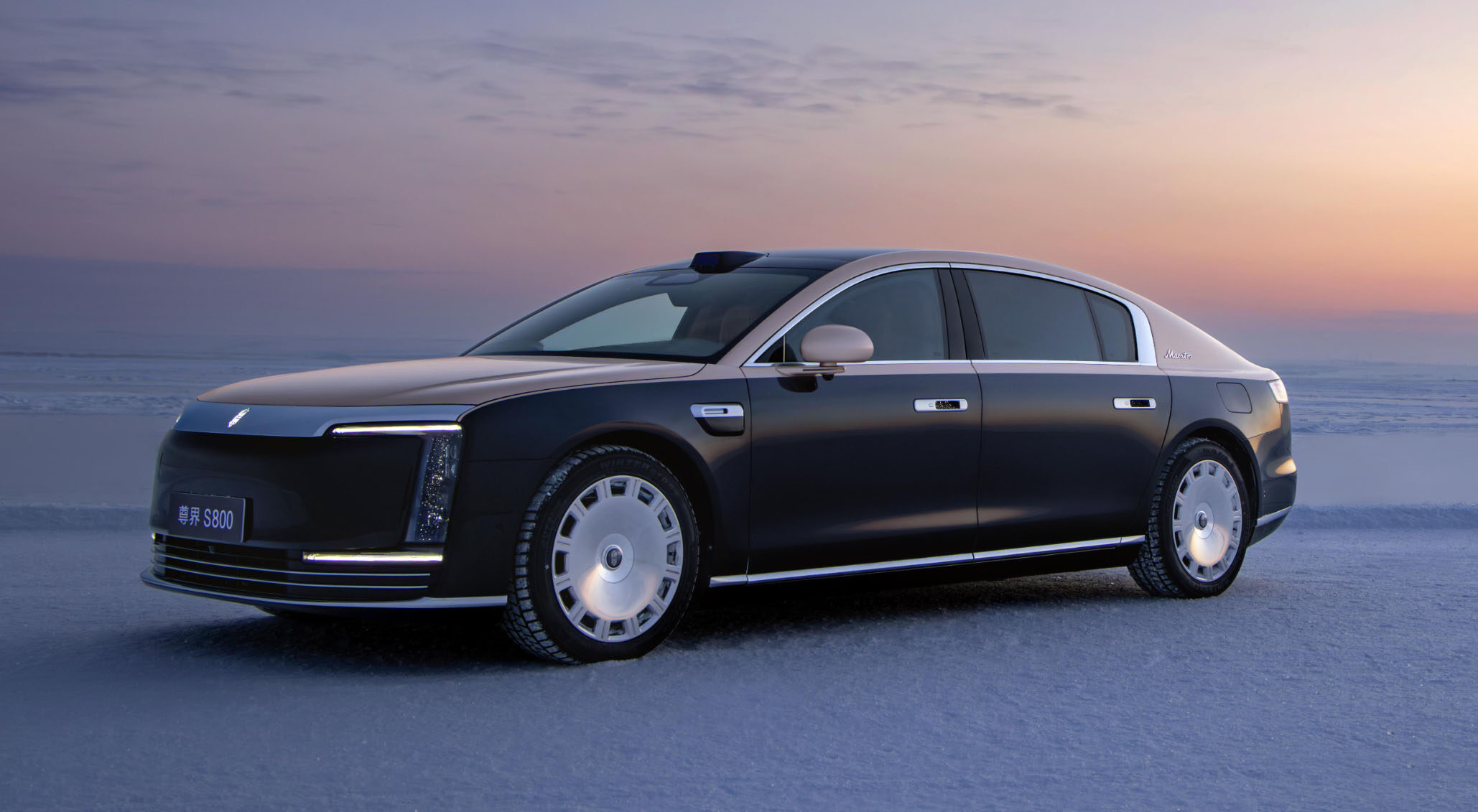
I. Maextro S800 Proven Market Performance: Completely Disrupting the Million-Dollar Luxury Sedan Landscape The Maextro S800, priced at 70.8-101.8 ten thousand yuan, directly competes with the Mercedes-Benz S-Class, BMW 7 Series, Maybach S-Class, and Porsche Panamera—traditional top-tier luxury sedans. Since its launch, it has consistently ranked first in sales of domestic luxury sedans over 70 ten thousand yuan for multiple consecutive months, frequently surpassing the Maybach S-Class in monthly sales. Cumulative deliveries have exceeded 1.6 ten thousand units. A significant number of existing BBA and Maybach owners are trading in their vehicles for the Maextro, effectively breaking the decades-long monopoly held by foreign brands on D-segment flagship luxury sedans. Maextro S800 Exterior Design Maextro Collector's Edition Model II. Five Core Drivers Behind the Maextro Phenomenon (1) Technological Generational Gap: Redefining Luxury Through Technology Rendering Traditional Advantages Obsolete Historically, luxury relied on hand-stitched leather, solid wood, brand heritage, and mechanical chassis tuning. Today's high-end clientele demands intelligence, safety, and an all-encompassing ecosystem. Huawei delivers a comprehensive dominance: 1. Exclusive High-Level Intelligent Driving Barrier: Huawei ADS 4.0 Map-Free Urban NCA is standard across the lineup. With a 94% success rate at complex intersections and 1 million real-world avoidance tests, drivers can safely take hands-off control on highways and in urban areas. In contrast, traditional million-yuan luxury cars generally require high-precision maps, offer incomplete features, and only support basic ACC cruise control, creating a generational gap in intelligence. 2. Class-Leading Chassis and Ride Quality: Equipped with the Tusking Longxing Smart Digital Chassis, suspension response occurs in milliseconds—far faster than the 100ms-level "magic carpet" air suspensions of traditional luxury cars. It previews road conditions in real-time to adjust damping instantly, ensuring a zero-bounce experience for rear passengers and upgrading traditional mechanical luxury to an intelligent, OTA-upgradable digital chassis. 3. No Weaknesses in Powertrain and Charging: The 800V ultra-high-voltage fast-charging platform delivers 70% charge in just 10.5 minutes. The pure electric version offers a CLTC range of 670km, while the extended-range version provides a total range of 1333km, completely eliminating anxiety for high-end business long-distance travel. Additionally, the Xuanwu ultra-high-strength body structure, featuring a 92% ratio of ultra-high-strength steel and 13 airbags, offers passive safety specifications far exceeding同级 fuel-powered flagship D-segment cars. 4. Exclusive HarmonyOS Ecosystem Advantage: The Harmony Cockpit seamlessly connects mobile phones, home appliances, office tools, and vehicles across all scenarios. Features include a 40-inch rear screen, multi-zone independent voice control, and an exclusive executive office mode for the driver's seat. Meanwhile, BBA and German luxury car infotainment systems remain closed ecosystems supporting only wired CarPlay, resulting in a significantly inferior user experience. (2) Extreme Precision Craftsmanship: Material Standards Rivaling Ultra-Luxury Brands, Eliminating the "Cheap Over-Spec" Perception Maextro breaks the stereotype of "high-spec, low-price" domestic vehicles by applying luxury-grade quality control to automotive manufacturing: • Paint DOI mirror clarity reaches 96.3, far surpassing the 90 standard of traditional luxury cars, with no orange peel effect and exceptional light-and-shadow aesthetics. • White body impurities are strictly controlled to within 3g (industry average 15g). Solid wood trim selection yields a pass rate of only 1.5%, ensuring every vehicle features unique interior wood grain patterns. • The entire cabin uses full-grain semi-aniline leather and 1300°C vacuum-cast metal physical buttons. Materials and workmanship rival entry-level Bentley and Rolls-Royce models, yet the price point is significantly lower. (3) Powerful Synergy of "Huawei Technology + JAC Manufacturing": An Irreplicable Model Huawei defines the software and core architecture for intelligent driving, the HarmonyOS cockpit, electric drive systems, and chassis algorithms. JAC Motors contributes decades of expertise in complete vehicle manufacturing, mass production of luxury vehicles, and factory-level quality control. Together, they built the exclusive Maextro Super Digital Factory, where iDME digital twin technology ensures AI-driven quality inspection throughout production, guaranteeing consistent mass-production quality. This clear division of labor creates a seamless hardware-software integration that avoids Huawei's lack of manufacturing qualifications while solving the slow iteration pace of traditional automakers, achieving a synergy of 1+1>2. (4) Precise Pricing Strategy: Bursting the Premium Bubble of Traditional Luxury Cars 1. Priced between 70 and 100 ten thousand yuan, it precisely targets the sales range of BBA flagships and Maybach main models, engaging in direct head-to-head competition without resorting to low-price displacement strategies. 70. At equivalent price points, traditional luxury offers only mechanical opulence. Maextro adds top-tier intelligence, extended range, a full ecosystem, superior safety, and customizable interiors, delivering a comprehensive value proposition that crushes competitors. 100. The upcoming 160-200 ten thousand yuan Collector's Edition will push into the ultra-luxury segment, entering the price bracket of Rolls-Royce and Bentley, marking a successful brand elevation. (5) Shift in Consumer Mindset: High-Net-Worth Individuals Shedding Faith in Century-Old Foreign Brands Amidst Rising Cultural Confidence 2. Older generations of wealthy buyers prioritized "European century-old brand endorsement" and social status labels. In contrast, new-generation entrepreneurs and tech elites no longer blindly迷信 brand history; they are willing to pay for quantifiable technology, comfort, and efficiency. 3. With a comprehensive boost in national cultural confidence, selecting top-tier domestic luxury sedans for high-end business scenarios has become a symbol of industrial patriotism and indigenous technology. This has sparked organic word-of-mouth within circles, with a Net Promoter Score (NPS) reaching as high as 85%, driving growth through referrals from existing owners. III. Beyond the Maextro Single Product: The Underlying Logic of China's Overall Luxury Vehicle Rise 160. Full-Chain Autonomous Control Achieved: High-End Development No Longer Held Hostage China has achieved a leapfrog advantage in the electrification and intelligence sectors: • Powertrains: Blade batteries, 800V high-voltage platforms, and full-domain thermal management are all self-developed, leading globally in range and charging speed. • Intelligence: Domestic intelligent driving systems such as Huawei ADS, XPeng XNGP, and Li Auto AD Max have comprehensively surpassed their foreign counterparts. • Chassis: Intelligent body control systems like YunNian and Tusking enable full technological self-reliance, eliminating dependence on German supplier chassis patents. In the new energy luxury market above 30 ten thousand yuan, the market share of Chinese brands has broken through 80%, completely discarding the outdated perception that "domestic cars are only suitable for low-cost commuting." 200. Luxury Definition Completely Reconstructed: From "Brand History Premium" to "Experience Value Luxury" Traditional luxury was defined by century-old heritage, imported status, leather and wood interiors, and rear-wheel-drive chassis. The new era of Chinese-style luxury establishes three new standards: ① Tech Luxury: High-level intelligent driving, infotainment ecosystems, and continuous OTA upgrades. ② Comfort Luxury: Air suspension, zero-gravity seats, full-vehicle sound insulation, and exclusive rear-seat administrative configurations. ③ Cultural Luxury: Original Chinese-inspired exterior and interior designs, exclusive color schemes reflecting traditional aesthetics, moving away from copying European design languages. 1. Mature Complete Industry Cluster Supporting Large-Scale High-End Production From chips and LiDAR to screens, batteries, chassis components, and final assembly, China has established a complete autonomous supply chain. A single Maextro model drives simultaneous technological upgrades across hundreds of upstream and downstream parts suppliers. High-end models no longer rely on large-scale imported components, ensuring controllable production costs and stable delivery speeds, providing the industrial foundation to compete internationally with established luxury brands. 2. Stagnation of Foreign Luxury Brands Creates Space for the High-End Market German BBA, Japanese, and Korean luxury brands普遍 exhibit three major weaknesses: 85. Centralized headquarters decision-making results in approval cycles for intelligent updates in the Chinese market lasting over six months, failing to match the monthly update rhythm of domestic automakers. 1. Severe reliance on the internal combustion engine path leads to poorly assembled "oil-to-electric" conversions, stingy configurations, and persistently high pricing for pure EV models. 80. Extremely poor localization of infotainment ecosystems results in widespread missing features such as voice interaction, smart home linkage, and in-car office capabilities. While rapidly iterating to suit local users, foreign brands cling to century-old arrogance and stand still. Consequently, the high-end market share is continuously eroded by domestic luxury brands. 30. Generational Shift in Consumer Base: Complete Overhaul of High-End Purchasing Power Currently, the primary demographic for purchasing or upgrading luxury cars above 50 ten thousand yuan consists of post-70 entrepreneurs and post-80-90 tech innovators, internet leaders, and new real-economy bosses: • They do not blindly worship the halo of overseas luxury; after personally experiencing smart cockpits and high-level intelligent driving, they are willing to pay for genuine experiences. • In business reception scenarios, domestic flagship luxury sedans have become the new business card for pragmatic and tech-forward corporate images, completing a reversal in social attributes. IV. Industry Summary: Maextro Is Not an Anomaly but a Microcosm of China's Automotive Industry Upgrading 80. Short-Term: Leveraging Huawei's intelligent advantages, Maextro continues to secure its leadership in the 70-100 ten thousand yuan D-segment sedan market, further squeezing the market share of Maybach and the Mercedes-Benz S-Class. 2. Medium-to-Long Term: Domestic high-end models such as Yangwang, Maextro, Nio ET9, and Zeekr 009 now fully cover the 50-200 ten thousand yuan luxury price spectrum, forming a comprehensive domestic luxury matrix. 3. Industrial Level: China's automotive industry has officially completed the three-step transition from low-end OEM manufacturing → mid-range affordable volume sales → autonomous pricing power for high-end brands. The profit high-ground of luxury cars, once firmly held by Japanese, Korean, and German joint ventures, has officially entered a new era dominated by Chinese brands. In contrast to the continued marginalization of Japanese and Korean automakers in China and the shrinking share of fuel vehicles, this rise and fall is an inevitable outcome of the global wave of automotive electrification and intelligence, marking a complete shift of industrial discourse power eastward.